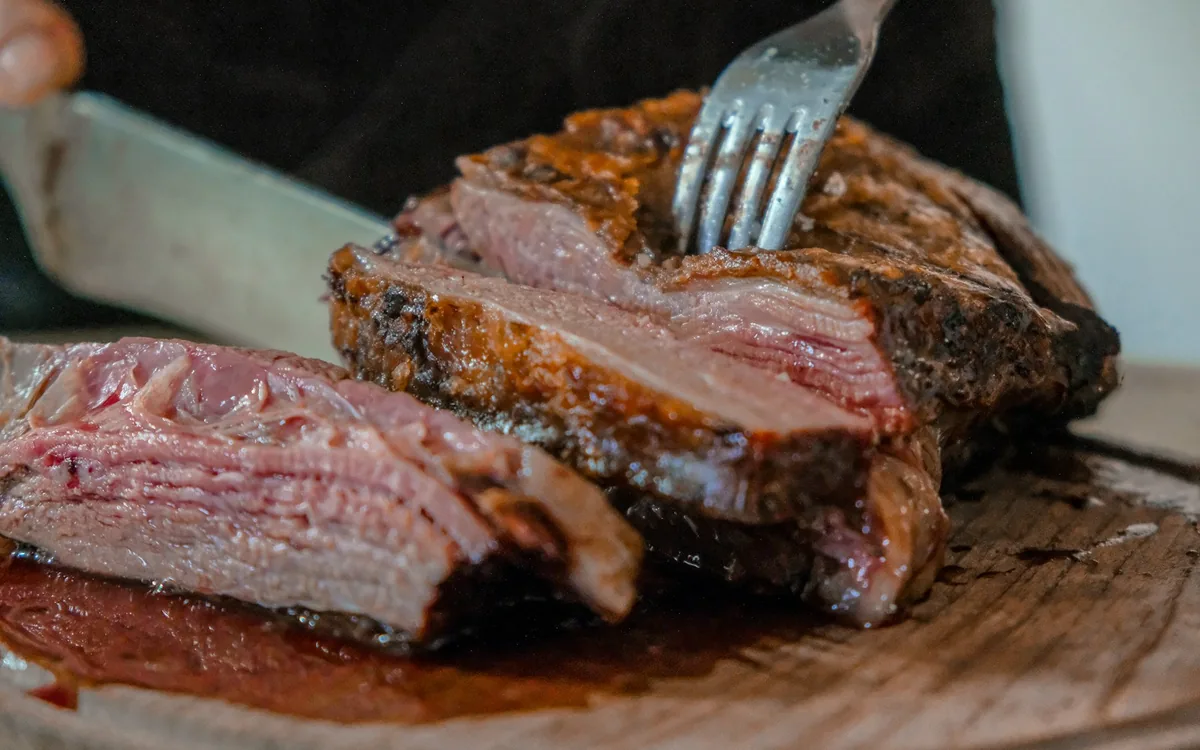
- Bone-in meat
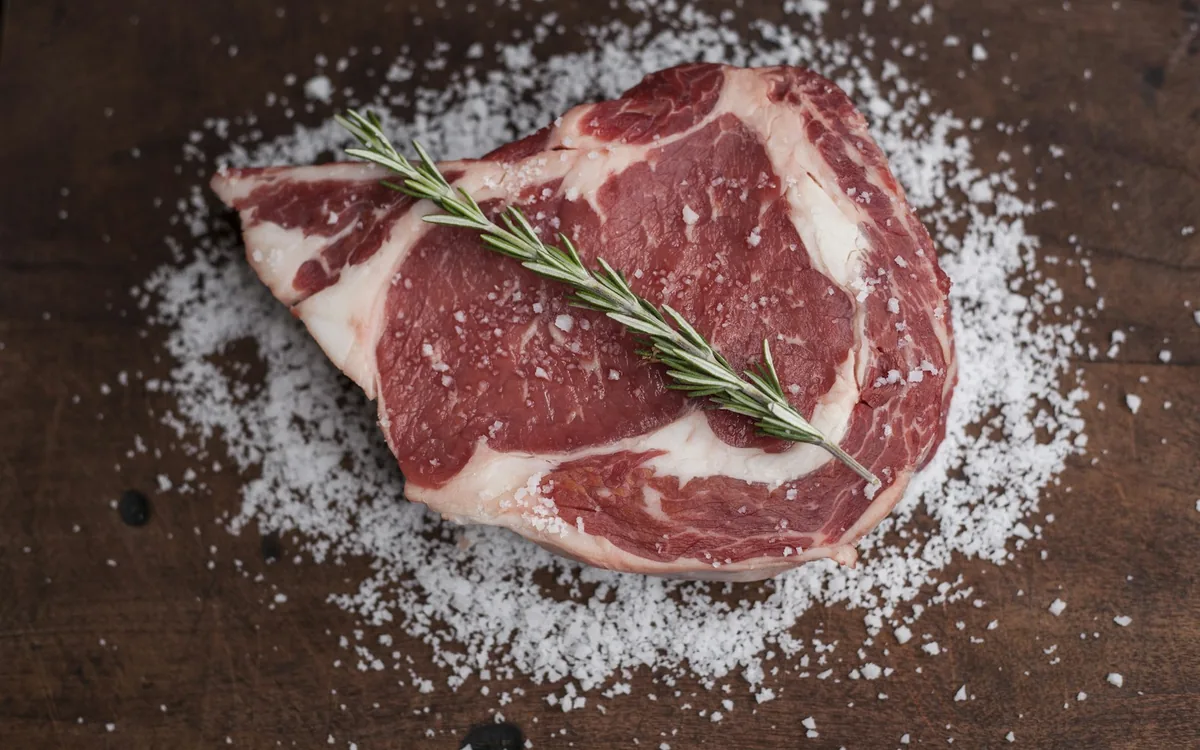
- Boneless meat
- Shelf price is only the first number
- Bone-in chicken
- Boneless chicken
- There are actually three useful meat prices
- 1. As-purchased price
- 2. Raw edible cost
- 3. Cooked edible cost
- What does edible yield mean?
- Calculate price per edible pound
- Use this shortcut
- Cooking yield adds another layer
- Example
- USDA gives a useful real-world example with lamb
- Example using the USDA lamb yields
- Bone-in does not automatically lose
- Find the boneless break-even price
- If boneless costs less than $7.50/lb
- If boneless costs more than $7.50/lb
- At $7.50/lb
- Use the break-even formula
- You can reverse the calculation too
- Create a break-even discount
- Use food-specific yield data
- Whole chicken can have a very different yield from boneless portions
- Whole chicken can provide other useful parts
- Do not assign imaginary value to bones
- Use a conservative byproduct credit
- Stock is not free if you would never have bought stock anyway
- Skin also requires a household-specific decision
- Your personal yield can be more useful for repeat purchases
- Measure several batches for a better estimate
- Separate trimming loss from cooking loss if you want more detail
- Raw edible yield
- Cooking yield from trimmed meat
- Overall cooked edible yield
- Use raw edible yield for recipes that specify raw boneless meat
- Formula for purchase quantity
- Use cooked yield for meal portions
- Calculate cost per cooked portion
- Use your household portion size
- Portion formula
- Do not use a Nutrition Facts serving as your only meat-cost portion
- Compare equivalent cuts where possible
- Compare bone-in thighs with boneless thighs when possible
- Compare raw with raw at the shelf
- Convenience has value, but keep it separate from edible cost
- Do not assign an arbitrary hourly wage to home deboning unless you really need that analysis
- Bone-in can make sense for slow-cooked meals even when boneless is close in price
- Boneless can make sense even when it is slightly more expensive
- Focus on meaningful price differences
- Calculate weekly impact
- Sales can completely change the winner
- Example sale calculation
- Bulk packages need the same yield calculation
- Avoid double-counting waste
- Bone weight is not the same as avoidable food waste
- Actual edible meat waste can still affect the result
- Cooked edible cost before waste
- Effective cost of meat actually eaten
- Leftover meat in the freezer is still inventory
- A bone-in versus boneless chicken example
- Bone-in thighs
- Boneless thighs
- Another example where boneless wins
- Bone-in
- Boneless
- A family dinner example
- Bone-in option
- Boneless
- A weekly example
- Bone-in
- Boneless
- How much meat should you buy?
- Build a personal meat yield table
- Add cost per household portion
- A reusable comparison worksheet
- BONE-IN OPTION
- BONELESS OPTION
- RESULT
- The fastest comparison
- Bone-in
- Boneless
- If you do not know the yield
- Use USDA yield information
- Measure your own
- Use a conservative estimate temporarily
- Do not copy a yield from a completely different cut
- Common mistakes
- Comparing shelf price per pound only
- Treating the bone-in purchase as 100% edible
- Assuming boneless is always cheaper
- Assuming bone-in is always the bargain
- Using one yield percentage for every meat
- Comparing a whole chicken with boneless breast as though bone is the only difference
- Mixing raw weight and cooked weight
- Ignoring cooking loss
- Double-counting bones
- Calling bone weight household food waste
- Counting bones as financially valuable when they are never used
- Ignoring usable stock or other byproducts you genuinely use
- Letting convenience disappear from the decision
- Buying a large bone-in package because it is cheap without checking meal requirements
- Frequently Asked Questions
- Compare the meat you eat, not the bone you buy
How to Compare Bone-In and Boneless Meat by Real Cost
Bone-in meat often looks cheaper at the store.
But part of the weight you are paying for is bone, and depending on the cut, there may also be skin, fat, or trimming that does not become the meat you serve.
Boneless meat usually costs more per pound or kilogram, but more of the purchased weight may become usable food.
So I would not compare:
$5 per pound bone-in
with:
$7 per pound boneless
and immediately conclude that bone-in is cheaper.
Instead, calculate:
Calculation Rule
For an even more practical comparison:
Calculation Rule
For example, suppose:
Bone-in meat
Price:
$5 per pound
Cooked edible yield:
55%
Real cooked meat cost:
Calculation Rule
Boneless meat
Price:
$7 per pound
Cooked edible yield:
75%
Real cooked cost:
Calculation Rule
Despite the large difference at the meat counter, the final cost of edible cooked meat is almost the same.
The yield figures here are hypothetical. Actual yield varies considerably by species, cut, trimming, skin, preparation method, and cooking method.
USDA’s Food Buying Guide specifically distinguishes food As Purchased, or AP, from the amount that ultimately becomes an edible serving, and its meat tables provide different yields for boneless products and products containing bones.
Shelf price is only the first number
The store might show:
Bone-in chicken
$2.50/lb
Boneless chicken
$4.00/lb
The obvious reaction is:
Bone-in is $1.50 cheaper per pound.
That statement is true for the purchased weight.
It does not tell you the price of:
one pound of meat you actually eat.
If part of the bone-in pound consists of:
- Bone
- Skin you remove
- Fat you trim
- Cooking losses
then the amount reaching the plate is less than one pound.
USDA’s Food Buying Guide is built around this distinction between purchase quantity and usable yield.
There are actually three useful meat prices
I separate the comparison into three levels.
1. As-purchased price
What the store charges.
Example:
$5/lb raw bone-in
2. Raw edible cost
What the meat costs after removing bone and other parts you do not use, but before cooking.
3. Cooked edible cost
What the meat costs after both preparation losses and cooking losses.
The best metric depends on what you are trying to calculate.
If your recipe needs:
500 g raw boneless meat
compare raw edible cost.
If you want to know:
What does 150 g of cooked meat on the plate really cost?
use cooked edible cost.
What does edible yield mean?
Edible yield tells you what share of the purchased weight becomes usable food.
Use:
Calculation Rule
Example:
Purchase:
1,000 g
Usable raw meat:
700 g
Yield:
Calculation Rule
or:
70%
The other:
300 g
may include bone, skin, trimming, or other material that is not part of the meat quantity you are comparing.
USDA uses AP and EP calculations for this reason. Its Appendix B shows how yield factors are used to convert between the quantity purchased and the quantity actually required for a recipe or serving.
Calculate price per edible pound
If bone-in meat costs:
$4/lb
and edible yield is:
65%
use:
Calculation Rule
Real raw edible cost:
$6.15 per edible pound
Now suppose boneless meat costs:
$6.50/lb
and is essentially all usable before cooking.
By raw edible weight:
Bone-in:
$6.15/lb
Boneless:
$6.50/lb
Bone-in remains cheaper, but only by:
$0.35 per edible pound
The shelf suggested a:
$2.50 difference
The edible comparison shows that the real gap is much smaller.
Use this shortcut
When price is already stated per pound or kilogram:
Calculation Rule
Example:
$8/kg
80% yield:
Calculation Rule
Another:
$10/kg
95% yield:
Calculation Rule
The $8 product looked dramatically cheaper.
After accounting for yield:
$10.00 versus $10.53 per edible kilogram
The difference is only:
$0.53
Cooking yield adds another layer
Raw edible meat does not necessarily weigh the same after cooking.
USDA FSIS explains that meat and poultry contain substantial water and that moisture content changes during cooking.
So if your goal is the cost of:
cooked meat on the plate
you need the cooked edible yield.
Use:
Calculation Rule
Then:
Calculation Rule
Example
You buy:
1 kg bone-in meat for $8
After cooking and removing the bone, you obtain:
500 g cooked edible meat
Cooked edible yield:
Calculation Rule
Real cooked cost:
Calculation Rule
or:
$16/kg cooked edible meat
Now compare a boneless cut.
Purchase:
1 kg for $11
Cooked edible amount:
750 g
Real cost:
$11 ÷ 750 × 100 ≈ $1.47 per 100 g
Even though boneless meat cost:
$3 more per purchased kilogram
it is cheaper per 100 g of cooked meat in this hypothetical example.
USDA gives a useful real-world example with lamb
USDA FSIS states that after cooking, one pound of raw bone-in lamb leg or roast yields about 8 to 9 ounces of edible meat, while ground lamb or boneless cuts yield about 10.5 ounces per raw pound.
That example shows why shelf prices cannot be compared directly.
A raw pound of each product does not give you the same amount of cooked meat.
Example using the USDA lamb yields
Suppose bone-in lamb costs:
$6/lb
and your cooked edible yield is:
8.5 oz per raw pound
8.5 ounces is:
Calculation Rule
Real cooked cost:
$6 ÷ 0.53125 ≈ $11.29 per cooked edible pound
Now suppose boneless lamb costs:
$8/lb
and produces:
10.5 oz cooked edible meat per raw pound
10.5 ounces:
Calculation Rule
Real cooked cost:
$8 ÷ 0.65625 ≈ $12.19 per cooked pound
In this example:
Bone-in:
$11.29/lb cooked edible
Boneless:
$12.19
Bone-in still wins.
But instead of being:
$2 cheaper per pound
it is only about:
$0.90 cheaper per pound of cooked edible meat.
That is a much more meaningful comparison.
Bone-in does not automatically lose
This is important.
The point is not:
Boneless meat is always cheaper.
It is:
You cannot know from shelf price alone.
Bone-in can still provide excellent value when its price discount is large enough.
Boneless can win when:
- The price gap is relatively small.
- Bone content is high.
- A lot of trimming is required.
- Boneless yield is substantially higher.
- Your recipe needs only boneless edible meat.
Calculate rather than assuming.
Find the boneless break-even price
This is one of the most useful grocery calculations.
Suppose:
Bone-in price:
$5/lb
Bone-in cooked yield:
50%
Boneless cooked yield:
75%
Bone-in real cost:
Calculation Rule
To match that $10 cooked cost, boneless meat with a 75% yield could cost:
Calculation Rule
So:
If boneless costs less than $7.50/lb
Boneless is cheaper per cooked edible pound.
If boneless costs more than $7.50/lb
Bone-in is cheaper.
At $7.50/lb
They are approximately equal.
Use the break-even formula
Calculation Rule
Example:
Bone-in:
$4/lb
Yield:
55%
Boneless yield:
75%
Calculation:
$4 × 0.75 ÷ 0.55 ≈ $5.45
If boneless is:
below $5.45/lb
it is cheaper per cooked edible pound.
If boneless is:
above $5.45
bone-in is cheaper.
This formula lets you make the comparison directly at the store once you know reasonable yield estimates for the cuts you commonly buy.
You can reverse the calculation too
Suppose boneless is:
$6/lb
Boneless yield:
75%
Bone-in yield:
55%
Calculate the maximum bone-in price that would tie:
Calculation Rule
Calculation Rule
If bone-in is:
less than $4.40/lb
bone-in wins.
If it is:
more than $4.40
boneless wins.
Create a break-even discount
Another useful question is:
How much cheaper does bone-in need to be?
Suppose:
Bone-in cooked yield:
55%
Boneless:
75%
Yield ratio:
Calculation Rule
This means the bone-in shelf price needs to be approximately:
73.3% of the boneless price
to produce the same cooked edible cost.
If boneless costs:
$8/lb
Break-even bone-in price:
$8 × 0.733 ≈ $5.87/lb
Bone-in below:
$5.87
is cheaper by this model.
Bone-in above that:
Boneless is cheaper.
Use food-specific yield data
Do not create one rule such as:
Bone-in meat is always 60% edible.
Yield varies with:
- Animal species
- Cut
- Bone size
- Skin
- Fat
- Trimming
- Cooking method
- Doneness
- Preparation technique
USDA’s Food Buying Guide lists different yield information for a wide range of meats, poultry, and fish rather than relying on one universal percentage.
Whole chicken can have a very different yield from boneless portions
USDA Food Buying Guide data, for example, lists a whole chicken yield of about 0.36 pound of cooked, boned chicken meat without skin from one pound as purchased for the referenced whole-chicken entry.
That illustrates why comparing:
whole chicken price per pound
with:
boneless breast price per pound
requires much more than the shelf labels.
The whole bird includes substantial weight that does not become cooked, boned, skinless meat.
That does not make whole chicken a poor purchase. It simply means the products are not equivalent pound for pound.
Whole chicken can provide other useful parts
A whole chicken might also provide:
- Dark meat
- White meat
- Skin
- Bones for stock
- Drippings
If you intentionally use several of those components, a comparison based only on boneless skinless meat can understate the household value you receive.
This is where a simple edible-meat calculation and your actual cooking habits need to work together.
Do not assign imaginary value to bones
Suppose you say:
I can make stock from the bones, so the bone is worth $5.
That may exaggerate the benefit.
If making stock from bones genuinely replaces broth you would otherwise purchase, you can assign some replacement value.
But keep it realistic.
For example:
Purchase cost:
$12
You estimate that the bones produce stock replacing:
$1.50 of broth you would otherwise buy
Adjusted meat cost:
Calculation Rule
Then divide:
$10.50 ÷ edible meat yield
That can be reasonable.
But do not assign a large arbitrary value simply to make bone-in meat look cheaper.
Use a conservative byproduct credit
Formula:
Calculation Rule
Then:
Calculation Rule
Use this only when the byproduct:
- Is actually used.
- Replaces something you would realistically purchase.
Otherwise, give it:
$0 financial credit
in the comparison.
Stock is not free if you would never have bought stock anyway
Suppose you normally use water rather than purchased stock.
Bones may still have culinary value to you.
But saying:
The bones saved me $3 of stock
is misleading if you would not have spent that $3.
Financial savings should compare against a real alternative.
Skin also requires a household-specific decision
Some people eat poultry skin.
Others remove it.
If you eat it, it is part of your edible yield.
If you discard it, it should not be counted as the edible meat quantity you are comparing.
This is why your personal preparation method can produce a different yield from another household.
Your personal yield can be more useful for repeat purchases
If you frequently buy the same cut, measure it once.
Example:
Purchase:
2,000 g bone-in chicken
After cooking and removing bones:
1,100 g of the meat you actually use
Personal cooked yield:
Calculation Rule
Save:
55% cooked edible yield
Next time bone-in chicken costs:
$5/kg
Estimated cooked edible cost:
Calculation Rule
Now you have a household-specific shopping figure.
Measure several batches for a better estimate
One package may contain unusually large or small bones.
A more reliable yield can come from several purchases.
Example:
Batch 1:
54%
Batch 2:
57%
Batch 3:
53%
Average:
(54 + 57 + 53) ÷ 3 ≈ 54.7%
Round:
about 55%
Now you have a practical planning value.
You do not need laboratory precision.
Separate trimming loss from cooking loss if you want more detail
Suppose:
Purchased bone-in:
1,000 g
After removing bone and excess trimming before cooking:
700 g
After cooking:
520 g
Raw edible yield
Calculation Rule
Cooking yield from trimmed meat
520 ÷ 700 ≈ 74.3%
Overall cooked edible yield
Calculation Rule
For grocery-to-plate cost, the most useful number is often:
52%
because it includes the complete journey from store package to cooked meat.
Use raw edible yield for recipes that specify raw boneless meat
Suppose your recipe says:
500 g raw boneless chicken
You are considering buying a bone-in cut instead.
If your bone-in cut has:
70% raw edible yield
purchase quantity needed:
500 ÷ 0.70 ≈ 714 g bone-in
Now compare the price of:
714 g bone-in
with:
500 g boneless
This is more accurate than buying 500 g of both.
Formula for purchase quantity
Calculation Rule
Example:
Need:
1 kg raw edible meat
Yield:
65%
Purchase:
1 ÷ 0.65 ≈ 1.54 kg bone-in
If bone-in costs:
$5/kg
Cost:
Calculation Rule
Boneless option:
1 kg at $7.25/kg
Cost:
$7.25
In this example, boneless is cheaper for the kilogram of usable raw meat despite its higher shelf price.
Use cooked yield for meal portions
Suppose you need:
600 g cooked meat
Bone-in cooked yield:
50%
Required raw purchase:
Calculation Rule
If bone-in costs:
$6/kg
Purchase cost:
Calculation Rule
Boneless cooked yield:
75%
Required:
Calculation Rule
Boneless price:
$8/kg
Cost:
Calculation Rule
Boneless wins:
$6.40 versus $7.20
Again, the shelf price alone would have suggested the opposite.
Calculate cost per cooked portion
This may be the easiest comparison for family meal planning.
Suppose:
Bone-in package:
$10
Produces:
5 cooked household portions
Cost per portion:
Calculation Rule
Boneless package:
$13
Produces:
8 portions
Cost:
Calculation Rule
Boneless has the higher package price but lower cost per cooked portion.
Use your household portion size
Suppose your normal cooked meat portion is:
150 g
Bone-in purchase:
$12
Cooked edible yield:
900 g
Number of 150 g portions:
Calculation Rule
Cost per household portion:
Calculation Rule
Boneless:
$15
Cooked yield:
1,200 g
Portions:
Calculation Rule
Cost:
Calculation Rule
This can be more intuitive than price per kilogram.
Portion formula
Calculation Rule
Then:
Calculation Rule
This also helps with grocery quantity planning.
Do not use a Nutrition Facts serving as your only meat-cost portion
A standardized serving or meal-program portion can be useful for comparison, but your household’s actual portion may differ.
USDA’s Food Buying Guide is designed primarily for Child Nutrition Programs, where defined servings and ounce equivalents are important. It should not be interpreted as a personalized household portion prescription.
For household cost calculations, use the portion your meal plan actually requires.
Compare equivalent cuts where possible
Bone-in and boneless products can differ in more than bone content.
For example, one may have:
- More skin
- Different fat content
- Different muscle
- Different preparation
- Different quality grade
Try to compare options that would realistically serve the same meal.
Comparing:
bone-in chicken thighs
with:
boneless skinless chicken breast
is not a pure bone-versus-boneless comparison.
They are different cuts with different characteristics.
The yield math is still useful, but do not pretend bone is the only difference.
Compare bone-in thighs with boneless thighs when possible
A cleaner test is:
bone-in chicken thighs
versus:
boneless chicken thighs
or:
bone-in lamb leg
versus:
boneless lamb leg
This isolates the cost impact more effectively.
Compare raw with raw at the shelf
If both prices are:
per raw pound
start there.
Then convert each using an appropriate yield.
Do not compare:
Bone-in raw price:
$5/lb
with:
Boneless cooked prepared meat:
$9/lb
without accounting for the fact that the second product has already undergone preparation and cooking.
The two products are at different stages.
Convenience has value, but keep it separate from edible cost
Boneless meat may save:
- Deboning time
- Trimming
- Cleanup
- Preparation effort
Bone-in meat may suit particular recipes or cooking styles better.
These factors can influence your decision.
But I would calculate:
food cost
first.
Then consider:
convenience
separately.
This keeps the financial comparison understandable.
Do not assign an arbitrary hourly wage to home deboning unless you really need that analysis
You could say:
It takes me ten minutes to debone this, and my time is worth $30 per hour, so add $5.
But for normal household grocery planning, this often creates false precision.
A simpler judgment is:
Is the price saving worth the extra preparation to me?
That is usually enough.
Bone-in can make sense for slow-cooked meals even when boneless is close in price
Your recipe may specifically benefit from:
- The cut available bone-in
- Braising
- Roasting
- Stock-making
- A particular texture
The cheapest edible-meat calculation does not have to dictate every meal.
Use it to understand the financial tradeoff.
Boneless can make sense even when it is slightly more expensive
Suppose:
Bone-in real edible cost:
$8.20/kg
Boneless:
$8.50/kg
Difference:
$0.30/kg
For a 500 g meal:
Difference:
$0.15
You may decide that:
15 cents
is worth the preparation convenience.
The calculation has still done its job.
It has shown that the real cost difference is tiny.
Focus on meaningful price differences
Suppose two options differ by:
$0.04 per cooked portion
You probably do not need to redesign your grocery routine around four cents.
Now suppose the difference is:
$1.20 per portion
and your family eats six portions each week.
Weekly difference:
$7.20
Annualized over 52 weeks:
$374.40
That deserves more attention.
Calculate weekly impact
Use:
Calculation Rule
Example:
Bone-in:
$1.75 per cooked portion
Boneless:
$2.10
Difference:
$0.35
Household uses:
8 portions per week
Weekly:
Calculation Rule
Annualized if the pattern continues:
Calculation Rule
Now you can decide whether the difference matters to your budget.
Sales can completely change the winner
Normal prices:
Bone-in:
$5/kg
Boneless:
$8/kg
Bone-in wins after yield.
Next week:
Boneless sale:
$5.50/kg
Recalculate.
Do not assume the same format is always cheaper.
The break-even formula makes sale decisions easy.
Example sale calculation
Bone-in:
$4.50/kg
Yield:
55%
Real edible cost:
Calculation Rule
Boneless sale:
$6/kg
Yield:
75%
Real cost:
Calculation Rule
Boneless is now slightly cheaper.
A shopper looking only at:
$4.50 versus $6
could easily miss that.
Bulk packages need the same yield calculation
Suppose a large bone-in pack costs:
$20 for 5 kg
Shelf unit price:
$4/kg
If cooked edible yield is:
50%
Cooked meat:
2.5 kg
Real cooked price:
Calculation Rule
Now compare with a boneless bulk pack on the same cooked-yield basis.
The word:
bulk
does not eliminate the bones.
Avoid double-counting waste
Suppose bone-in meat has:
50% cooked edible yield
That yield already accounts for everything not included in the final cooked edible meat, depending on how you measured it.
Do not then subtract:
bone weight
again.
Choose a clear calculation:
purchase weight → cooked edible weight
and use that once.
Bone weight is not the same as avoidable food waste
If you intentionally purchased a bone-in cut, the bone is part of the product.
It lowers the edible yield, but it is not the same household problem as:
letting edible cooked meat spoil in the refrigerator.
Keep:
yield loss
and:
avoidable edible food waste
separate.
Actual edible meat waste can still affect the result
Suppose:
Purchase cost:
$10
Cooked edible meat:
600 g
You actually eat:
500 g
The final:
100 g
is discarded.
Cooked edible cost before waste
Calculation Rule
Effective cost of meat actually eaten
Calculation Rule
The additional waste increased the real cost further.
Do this only after any remaining usable meat has truly been lost, not while it remains future inventory.
Leftover meat in the freezer is still inventory
If you portion a bulk meat purchase and freeze half of it appropriately, that food has not been wasted.
It remains future meal inventory.
Do not divide the full package price only by what you ate this week.
Evaluate the purchase across the food you ultimately use.
A bone-in versus boneless chicken example
These numbers are hypothetical to show the calculation.
Bone-in thighs
Price:
$3/kg
Purchased:
2 kg
Cost:
$6
Cooked edible yield:
55%
Cooked meat:
Calculation Rule
Real cost:
$6 ÷ 1,100 × 100 ≈ $0.55 per 100 g
Boneless thighs
Price:
$4.50/kg
Purchased:
2 kg
Cost:
$9
Cooked yield:
75%
Cooked meat:
1,500 g
Real cost:
Calculation Rule
Bone-in:
$0.55 per cooked 100 g
Boneless:
$0.60
Bone-in wins, but by only:
$0.05 per 100 g cooked
not the:
$1.50/kg shelf-price gap
that first caught your eye.
Another example where boneless wins
Bone-in
$4/kg
Cooked edible yield:
45%
Real cost:
$4 ÷ 0.45 ≈ $8.89/kg
Boneless
$6/kg
Cooked yield:
75%
Real:
Calculation Rule
Boneless wins.
The higher shelf price was misleading.
A family dinner example
Family needs:
800 g cooked meat
Bone-in option
Cooked edible yield:
50%
Raw amount required:
Calculation Rule
Price:
$5/kg
Cost:
Calculation Rule
Boneless
Yield:
75%
Purchase needed:
800 ÷ 0.75 ≈ 1,067 g
Price:
$7/kg
Cost:
1.067 × $7 ≈ $7.47
Boneless costs:
about $0.53 less
for the same amount of cooked meat.
A weekly example
Household needs:
2.4 kg cooked meat per week
Bone-in
Yield:
50%
Required raw:
Calculation Rule
Price:
$4/kg
Weekly cost:
$19.20
Boneless
Yield:
75%
Required:
Calculation Rule
Price:
$5.50/kg
Cost:
$17.60
Boneless saves:
$1.60/week
At that use rate, the higher shelf-price option produces the lower grocery cost.
How much meat should you buy?
Once you know yield:
Calculation Rule
Example:
Need:
1,200 g cooked meat
Bone-in yield:
55%
Need to buy:
1,200 ÷ 0.55 ≈ 2,182 g
or:
about 2.18 kg
Boneless yield:
75%
Need:
Calculation Rule
Now multiply each by its store price.
This connects the cost calculation directly to your grocery list.
Build a personal meat yield table
For cuts you buy regularly, keep something like:
| Cut | Purchase price | Personal cooked yield | Real cooked cost |
|---|---|---|---|
| Bone-in chicken thighs | |||
| Boneless chicken thighs | |||
| Bone-in lamb | |||
| Boneless lamb | |||
| Bone-in pork | |||
| Boneless pork |
Update the prices whenever you shop.
The yields can remain as working estimates until your cooking method changes.
Add cost per household portion
If your normal cooked portion is:
150 g
add:
| Cut | Real cost per 100 g cooked | Cost per 150 g portion |
|---|---|---|
| Bone-in option | $0.80 | $1.20 |
| Boneless option | $0.90 | $1.35 |
Now the decision becomes much easier to understand.
Difference:
$0.15 per person
For four people:
$0.60 per dinner
A reusable comparison worksheet
BONE-IN OPTION
Shelf price per kg/lb:
—
Purchase quantity:
—
Purchase cost:
—
Raw edible quantity, if measured:
—
Cooked edible quantity:
—
Cooked edible yield:
Calculation Rule
Real cooked cost:
Calculation Rule
Cost per household portion:
—
BONELESS OPTION
Shelf price:
—
Purchase quantity:
—
Purchase cost:
—
Cooked edible quantity:
—
Cooked edible yield:
—
Real cooked cost:
—
Cost per portion:
—
RESULT
Bone-in real cost:
—
Boneless real cost:
—
Difference per portion:
—
Difference per household meal:
—
The fastest comparison
If you know both yield percentages:
Bone-in
Calculation Rule
Boneless
Calculation Rule
Lowest answer wins on edible cost.
Example:
Bone-in:
$5 ÷ 0.50 = $10
Boneless:
$7 ÷ 0.75 = $9.33
Boneless wins.
If you do not know the yield
You have three options.
Use USDA yield information
USDA’s Food Buying Guide contains yield information for many fresh and frozen boneless meats and for a number of bone-in meat and poultry products.
Measure your own
Weigh before preparation and after obtaining the cooked edible meat.
Use a conservative estimate temporarily
Then replace it with observed household yield after a few purchases.
For recurring grocery decisions, personal measurements can be especially valuable.
Do not copy a yield from a completely different cut
A whole chicken yield should not automatically be used for:
bone-in thighs
A lamb-leg yield should not be used for:
pork chops
USDA’s tables contain different entries because different products produce different serving yields.
Match the product as closely as possible.
Common mistakes
Comparing shelf price per pound only
Bone-in and boneless pounds do not necessarily provide the same amount of edible meat.
Treating the bone-in purchase as 100% edible
Account for the bone and other unused portions through yield.
Assuming boneless is always cheaper
A sufficiently large bone-in discount can still make it the lower-cost choice.
Assuming bone-in is always the bargain
A low shelf price can disappear after accounting for a low edible yield.
Using one yield percentage for every meat
USDA provides product-specific yield information because yields differ by cut and form.
Comparing a whole chicken with boneless breast as though bone is the only difference
Different cuts and edible components make this an imperfect comparison.
Mixing raw weight and cooked weight
Use a consistent basis.
Ignoring cooking loss
If your question is cost per cooked meat portion, calculate cooked edible yield.
Double-counting bones
If your cooked edible yield already excludes the bone, do not subtract it again.
Calling bone weight household food waste
Bone affects edible yield but is not the same issue as avoidable edible leftovers being discarded.
Counting bones as financially valuable when they are never used
Only assign byproduct value when it replaces something you would otherwise purchase.
Ignoring usable stock or other byproducts you genuinely use
If the byproduct has real replacement value in your household, a conservative adjustment can be reasonable.
Letting convenience disappear from the decision
Calculate edible cost first, then decide whether a small price difference is worth extra trimming or deboning.
Buying a large bone-in package because it is cheap without checking meal requirements
Calculate how much cooked meat the package is likely to produce.
Frequently Asked Questions
Is bone-in meat cheaper than boneless meat?
Not always. Bone-in meat often has a lower shelf price, but you are paying for bone and possibly other material that does not become edible meat. Compare each price after adjusting for yield.
What is the formula for comparing bone-in and boneless meat?
Use: Real edible cost = shelf price ÷ edible yield For cooked meat: Real cooked cost = shelf price ÷ cooked edible yield Calculate both options on the same basis.
How do I calculate meat yield?
Use: Yield = usable meat weight ÷ purchased weight For example: 600 g cooked edible meat from 1,000 g purchased: 600 ÷ 1,000 = 60% yield
What does AP mean in USDA meat yield information?
USDA uses AP for As Purchased and EP for Edible Portion. The distinction is used to calculate how much food must be purchased to obtain the amount available for serving.
Does bone-in meat lose more weight?
It can produce less edible meat per purchased pound because some purchase weight consists of bone and because meat also changes weight during cooking. Actual differences depend on the cut and preparation method. USDA provides product-specific yield information rather than one universal rule.
How much cooked meat does bone-in lamb yield?
USDA FSIS states that one pound of raw bone-in lamb leg or roast produces roughly 8 to 9 ounces of cooked edible meat, while ground lamb or boneless cuts yield about 10.5 ounces.
How much meat does a whole chicken yield?
A USDA Food Buying Guide entry for whole chicken reports approximately 0.36 pound of cooked, boned chicken meat without skin per pound as purchased for that product definition. Use the yield corresponding to the specific chicken product and preparation you are comparing.
How do I find the break-even boneless price?
Use: Break-even boneless price = bone-in price × boneless yield ÷ bone-in yield If the store’s boneless price is below that number, boneless is cheaper per equivalent edible amount.
Should I count bones if I use them for stock?
You can give them a conservative value if you genuinely use them and the stock replaces something you would otherwise buy. Do not assign arbitrary savings.
Should skin count as edible yield?
If you eat it, include it in the edible food you are valuing. If you remove it and are specifically comparing meat, leave it out.
Should I compare raw or cooked meat?
Use raw edible yield when your recipe requires raw boneless meat. Use cooked edible yield when you want to calculate the cost of meat that actually reaches the plate.
Why does cooked weight differ from raw weight?
Meat contains substantial moisture, and moisture changes during cooking. USDA FSIS documents differences in water content between raw and cooked meat and poultry.
Is boneless meat worth paying more for?
Sometimes. Calculate the real edible cost first. If boneless costs only slightly more after adjusting for yield, its convenience may make it worthwhile. If the difference is large, bone-in may offer better value.
Can I measure my own yield?
Yes. Weigh the raw purchased meat, then weigh the cooked edible meat after removing bones and the parts you do not eat. Use: Cooked edible weight ÷ raw purchased weight Repeated measurements can create a useful household-specific estimate.
What if some cooked meat is left over?
If it remains usable and will be eaten later, it is inventory, not waste. Only include it as wasted food if it is ultimately discarded.
Compare the meat you eat, not the bone you buy
The simplest way to compare bone-in and boneless meat is to stop at neither:
package price
nor:
price per pound
Instead ask:
How much edible meat will this purchase actually give me?
For each option:
Calculation Rule
Or, if you care about what reaches the plate:
Calculation Rule
USDA’s Food Buying Guide uses the same underlying principle by separating food As Purchased from the amount ultimately available for serving, and its meat section contains different yields for boneless and bone-in products.
Then calculate the break-even price.
If bone-in costs:
$5/lb
with a:
50% cooked edible yield
its real cooked cost is:
$10/lb
A boneless product yielding:
75%
can cost as much as:
$7.50/lb raw
before its real cooked cost exceeds the bone-in option.
That is far more useful than simply seeing:
$5 versus $7.50
at the meat counter.
Finally, consider what your household actually does with the product.
If you use the bones for stock, that can add value.
If you strongly prefer the convenience of boneless meat, a small cost difference may not matter.
If you repeatedly buy bone-in cuts but dislike trimming or never use the extra parts, the lower shelf price may not be saving as much as you think.
The correct grocery comparison is:
purchase price
→ usable yield
→ cooked edible quantity
→ real cost per portion
Once you calculate that chain, you can see whether the bone-in bargain is genuinely cheaper or whether the boneless package gives you more meat for your money.